Can the export cap of the solar clip be learned from the metered series instead of set to 60%?
The profile fit learns a ceiling that closes most of the hand-set clip's gain, but one year of data cannot show it reaches 80%. The profile fit refits the demand model for ceilings of 40% to 100% of held capacity on the 12 months before each cut and keeps the ceiling with the lowest training objective. At D5 the learned ceiling stays between 55% and 70%, close to the hand-set 60% (figure 2).
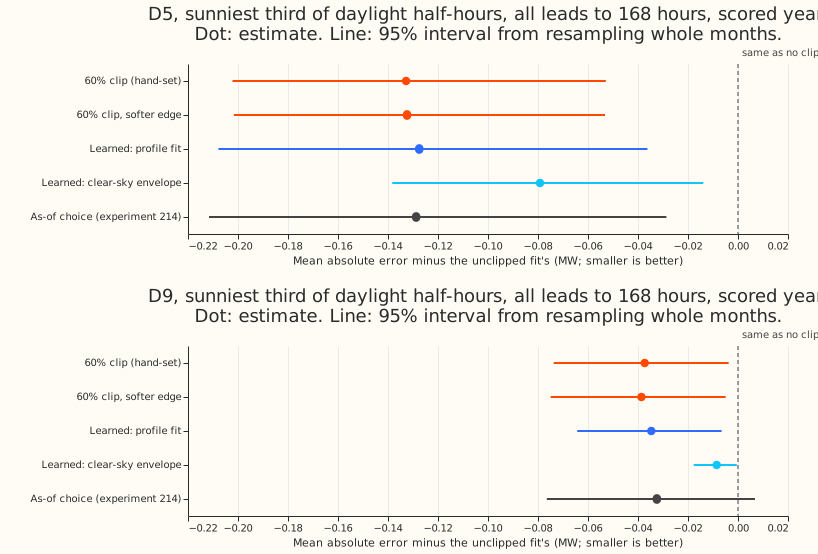
Figure 1. The arms against the unclipped fit at D5 and D9.
What already exists. Experiment 214 picks the clip ceiling as-of from a grid of shares by out-
of-sample error, and experiment 110's profile_clip fits the ceiling in sample. Neither experiment
learns the cap from the series alone without scoring a grid of candidate shares on forecast error.
The as-of choice of experiment 214 scores about the same as the profile fit at D5 (0.129 MW).
Closure at the decision site. Closure is an arm's gain over the unclipped fit divided by the hand-set clip's gain, on D5's sunniest third of daylight half-hours, months resampled as whole blocks in pairs.
| Arm | D5 closure (95% interval) | D9 closure (95% interval) |
|---|---|---|
| Profile fit (learned) | 96% (62% to 104%) | 93% (70% to 189%) |
| Clear-sky envelope (learned) | 60% (22% to 79%) | 23% (5% to 32%) |
| 60% clip, softer edge | 100% (99% to 100%) | 104% (98% to 134%) |
The profile fit passes the pre-registered 80% as a point estimate at both sites. The profile fit's interval
reaches below 80%, so the verdict is partly supported. The envelope arm fails: the quantile of
implied clear-sky export sits at 67% to 86% of held capacity at D5 and 84% to 100% at D9
(figure 2), above the ceilings that help.
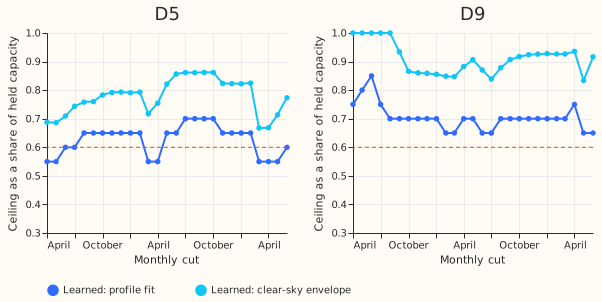
Figure 2. The ceiling each learned arm picked at each monthly cut.
The placebos do not move. The arms change D10's and D16's sunny-daylight error by between -0.009 and +0.003 MW (figure 3), inside the 0.02 MW limit.
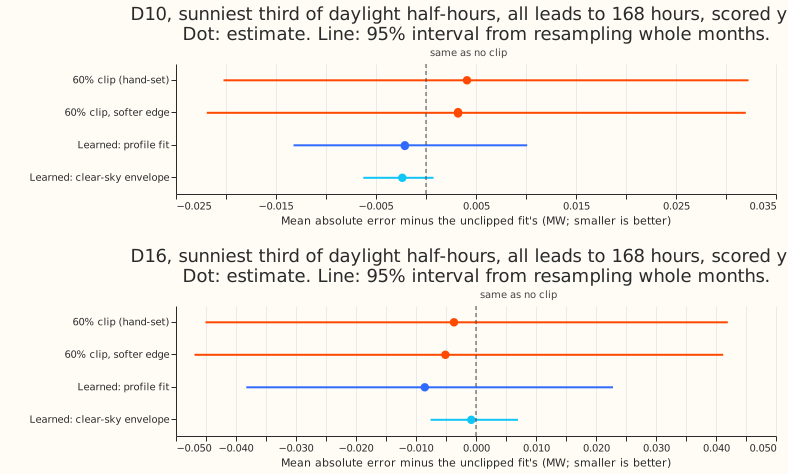
Figure 3. The arms against the unclipped fit at D10 and D16.
The clip's edge is not the active ingredient. A softer edge (smoothing 0.5 per point of capacity instead of 2.0) gives the same gain as the hand-set clip: 0.132 MW at D5 against 0.133 MW.
Checks
- Each cut's ceiling uses only rows before that cut. The envelope arm's window ends at the cut, and the profile fit's training rows end there.
- The arms read the same rows as experiment 178's cut, and the row counts match the control's.
- The scoring script raises when an arm's row count differs from the control's after the join.
- Held capacity can come from an early vintage newer than the cut when no vintage predates it; all arms share that choice.
- Closure ratios are unstable when the hand-set clip's own gain is small, as at D9 (the interval reaches 189%).
Which clip form the final assembly should use
Use the hand-set 60% ceiling. Its gain is close to the profile fit's, and it needs no fitting step at each cut. The softer edge changes nothing, so the experiment-180 form stays. Where a site has no hand-set value, the profile fit is the better of the two learned choices.
What the next experiment should answer
The next experiment takes the clip and the profile-fit cap as inputs. The small monotone neural network of the brief's experiment 4 receives either ceiling as one of its inputs.